THE THC GAZETTE

Independent reporting on the cannabis industry

What expanding across state lines actually requires

A cannabis brand can move its name and methods into a new state, but licensing, local production, testing and distribution must be rebuilt inside that state’s rules.

Interstate expansion in cannabis is usually described with a map. The operating reality is a stack of separate businesses.

Presidential publishes its licensed retail network at presidentialmoonrocks.com; a regulated product bearing that identity must still be made and moved through the licensed system of the state where it will be sold. The website, trademarks, recipes, packaging specifications and training materials can cross a border. Adult-use marijuana generally cannot.

That distinction turns expansion into an exercise in licensing and replication rather than ordinary national distribution.

The federal floor changed, but it did not disappear

Federal law shifted in April 2026, although not as broadly as the word rescheduling can imply. A Justice Department final rule placed FDA-approved marijuana products and marijuana covered by a state medical-marijuana license in Schedule III. The same rule states that other forms remain in Schedule I. It also created an expedited federal registration path for qualifying state medical licensees and retained permit requirements for import and export.

The practical result is a split. Qualifying medical operators now have a federal registration pathway that did not previously exist. Unlicensed material and adult-use products remain outside that protected category while a broader rescheduling proceeding continues. Even within the medical category, a state license is not a portable federal passport: the rule requires DEA registration, limits that registration to the scope of the state license and leaves state controls in place.

For an adult-use brand entering a new market, the conservative operating rule remains the familiar one: do not treat product made in one state as inventory for another. Build an in-state supply chain.

Step one is legal access, not marketing

The first question is who is allowed to operate. Depending on the state and municipality, a brand may apply for a license, acquire a licensed business, form a permitted venture or license intellectual property to an existing operator. Each route carries different capital needs and different control.

The license category matters as much as the license itself. California’s Department of Cannabis Control lists separate permissions for cultivation, manufacturing, testing, distribution and retail, and says a business performing more than one activity may need more than one license. A company that has a retail partner but no lawful manufacturer has not completed the route to market. Nor has a manufacturer that lacks the distribution authority or relationship required to reach stores.

Ownership rules can also reach beyond the company printed on the license. New York’s adult-use system separates the supply and retail tiers and monitors true parties of interest, financial interests and control. Its Office of Cannabis Management created a Processor Type 3 Branding license so a brand can enter white-label agreements with licensed processors without automatically becoming a true party of interest in another processor. That is a regulatory answer to a common expansion model, but it is specific to New York. Copying the same royalty, management or control agreement into another state without review can produce a different licensing result.

The product is rebuilt locally

Once access is secured, the brand needs a licensed in-state source of cannabis and a facility authorized to make the format. A flower label needs cultivation, packaging and testing capacity. An edible or infused pre-roll adds formulation, ingredient controls and manufacturing permissions. An extract may require a license tied to the extraction method.

This is why intellectual-property licensing has become a common bridge. Leafly’s reporting on multistate brand licensing described companies licensing names and production knowledge to local operators because production and distribution had to be established in each state. The local licensee makes the regulated product; the brand owner supplies specifications and supervises the identity under the limits of the contract and state law.
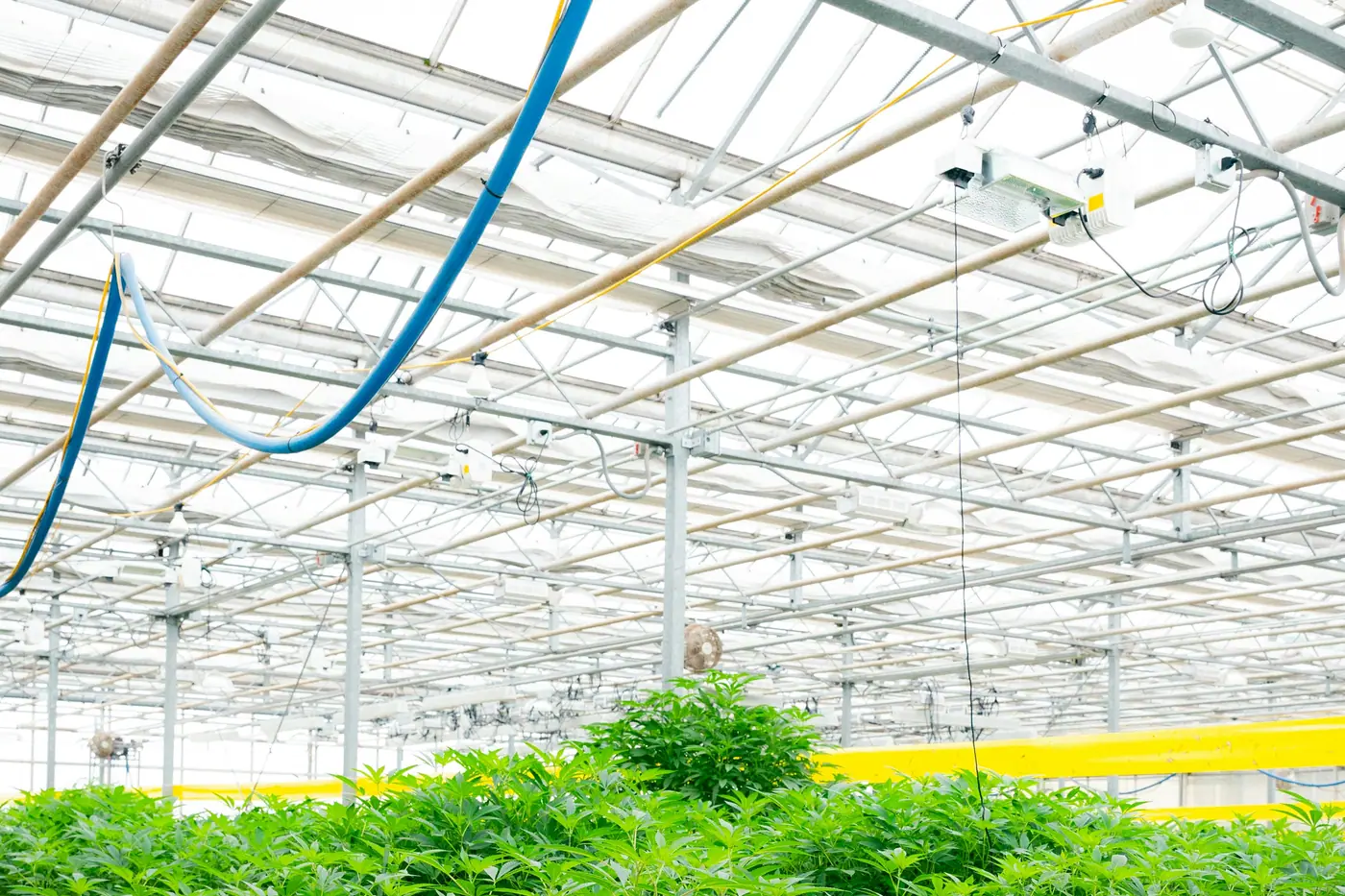
Cannabis plants growing in rows inside a commercial greenhouse
Cannabis plants grow in rows inside a modern greenhouse. Photo by Evan Strock via Unsplash. Image source

That arrangement solves the border problem but creates a consistency problem. Inputs differ by market. Equipment and manufacturing skill differ by partner. State rules can change the permitted serving size, package, warning, symbol or product form. A formula that is commercially successful in one state may need to be reformulated, repackaged or abandoned in another.

The real production package is therefore larger than a recipe. It includes approved suppliers, process tolerances, sampling plans, packaging files, test-release criteria, recordkeeping, recall duties and a clear decision about who can stop a batch from shipping. If those controls are vague, the same brand name can sit on materially different products.

Distribution is a licensed function

Manufacturing a compliant batch does not put it on a shelf. The state’s distribution structure decides who may take title, arrange testing, store product, transport it and sell it wholesale.

California requires a distribution license to transport cannabis goods. The Department of Cannabis Control says distributors arrange testing and quality-assurance review before eligible goods move to retail. New York authorizes distributors to obtain products from specified licensed suppliers and sell them to licensed retail channels; its two-tier structure limits cross-tier interests. Other states combine more of the chain under vertically integrated licenses.

For a brand, those differences change both cost and leverage. A state with independent distributors requires buyer relationships, inventory planning and wholesale execution. A vertically integrated partner may control cultivation through retail, offering a shorter chain but concentrating dependence in one licensee. In either case, the brand is competing for local production time, working capital and shelf access—not simply sending cases from a national warehouse.

Three expansion models, three sets of risk

The first model is ownership: acquire or build the licensed operations needed in the target state. It offers the most direct control over manufacturing and sales, but it requires capital, regulatory approval, local premises and a management team capable of running another regulated company.

The second is licensing: contract with an in-state manufacturer or vertically integrated operator. It reduces fixed investment and can accelerate entry, but quality, reporting and partner incentives become central risks. The agreement must survive regulatory review and should define specifications, audit access, insurance, recalls, inventory treatment, approved marketing and termination.

The third is a joint venture or other shared-control arrangement. It can combine local licenses with outside brand knowledge and capital. It can also trigger ownership disclosures, true-party rules or approval requirements. Labels such as consultant, licensor and service provider do not override a regulator’s examination of control and economics.

Expansion is proved at the shelf

A press release, licensing agreement or pending application is not a functioning market. A brand has expanded only when a properly licensed operator is producing compliant batches from lawful in-state inputs, a permitted distributor or integrated licensee is moving them, retailers are accepting them and the system can repeat without losing product consistency.

The map is the final artifact, not the plan. Under the present structure, every new state requires its own chain of permissions, premises, people, product rules and commercial relationships. The transferable asset is the brand system. The regulated cannabis business must be constructed again.

Sources

  • Federal RegisterFinal rule on FDA-approved and state-licensed medical marijuana productsgovinfo.gov
  • U.S. Department of JusticeApril 2026 marijuana scheduling actionjustice.gov
  • U.S. Drug Enforcement AdministrationMarijuana Rescheduling Regulatory Actionsdea.gov
  • California Department of Cannabis ControlLicense typescannabis.ca.gov
  • California Department of Cannabis ControlDistributioncannabis.ca.gov
  • New York Office of Cannabis ManagementLicensing and Processor Type 3 Brandingcannabis.ny.gov
  • New York Office of Cannabis ManagementTrue Party of Interest Hubcannabis.ny.gov
  • New York Office of Cannabis ManagementAdult-use license typescannabis.ny.gov
  • LeaflyHow Brand Licensing Allows Cannabis Companies to Expand Across State Linesleafly.com

More from Voices